


Do you know how to properly handle polymer and paper banknotes?
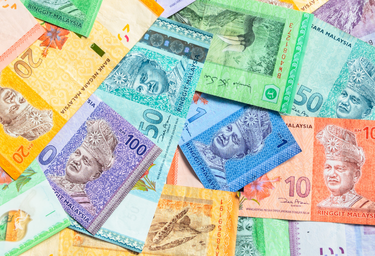
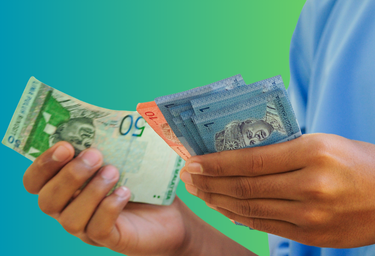
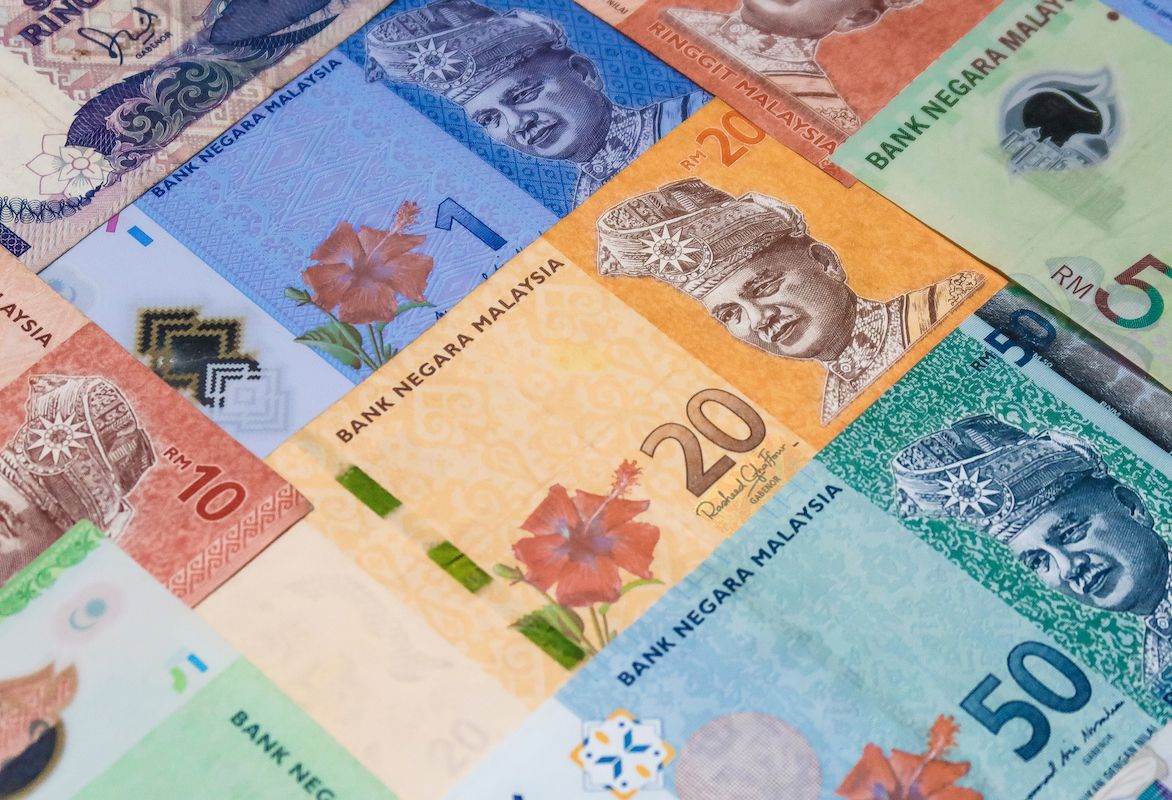
The RM1 and RM5 polymer banknotes were introduced in Malaysia's fourth currency series in 2012. In addition to being durable and not easily torn, the polymer banknote does not absorb water, is cleaner to handle and lasts longer. If the polymer banknote is handled properly, it can be used over a longer period of time. For that you need to:
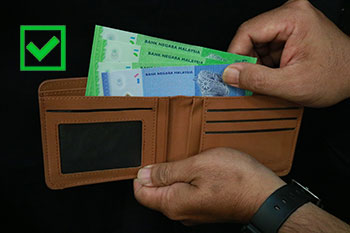
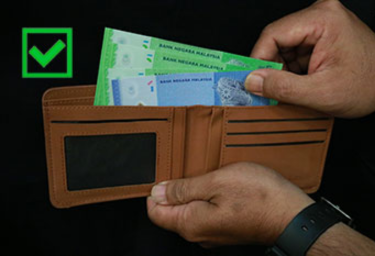
Keep polymer banknotes FLAT in your wallet
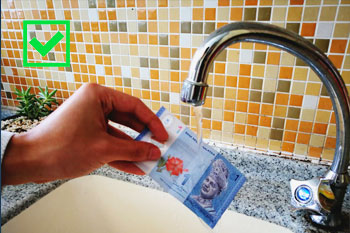
CLEAN polymer banknotes if dirty
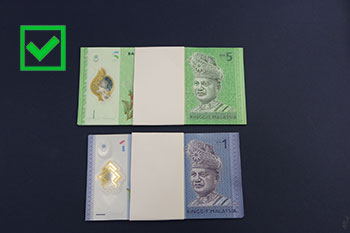
Use PAPER BANDS when packing polymer banknotes
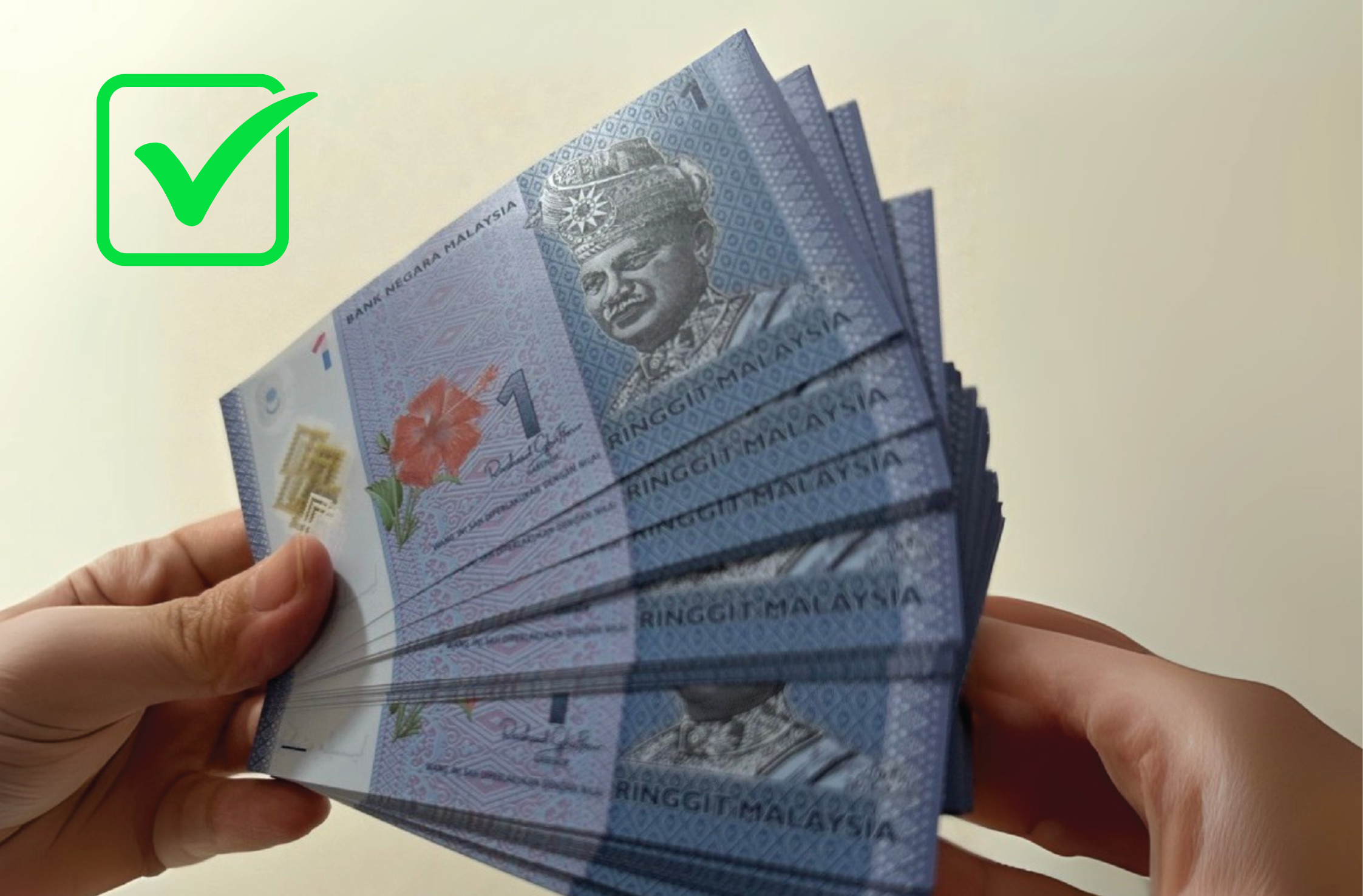
Lightly fan or SHUFFLE new polymer banknotes to keep them from sticking together
You should also avoid the following:
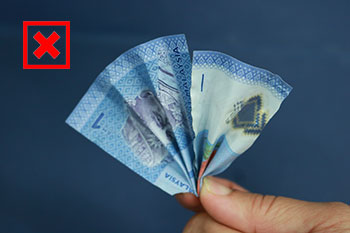
DO NOT modify or fold polymer banknotes repeatedly (e.g. as decoration) as it will leave permanent folding marks
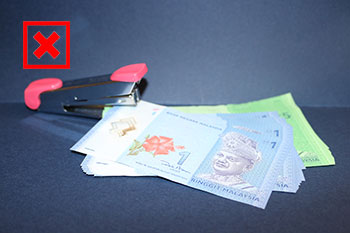
DO NOT staple, use sharp instruments on, or pin polymer banknotes
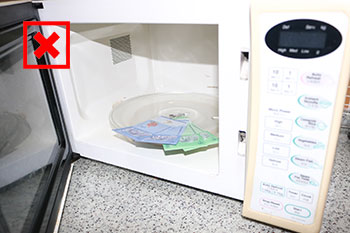
DO NOT directly expose polymer banknotes to high temperatures
Proper Handling of Paper Banknotes
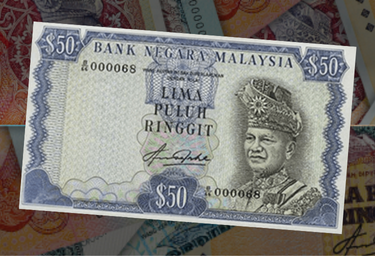
Paper banknotes are made of cotton. The proper way of handling paper banknotes are the same as polymer banknotes, that is:
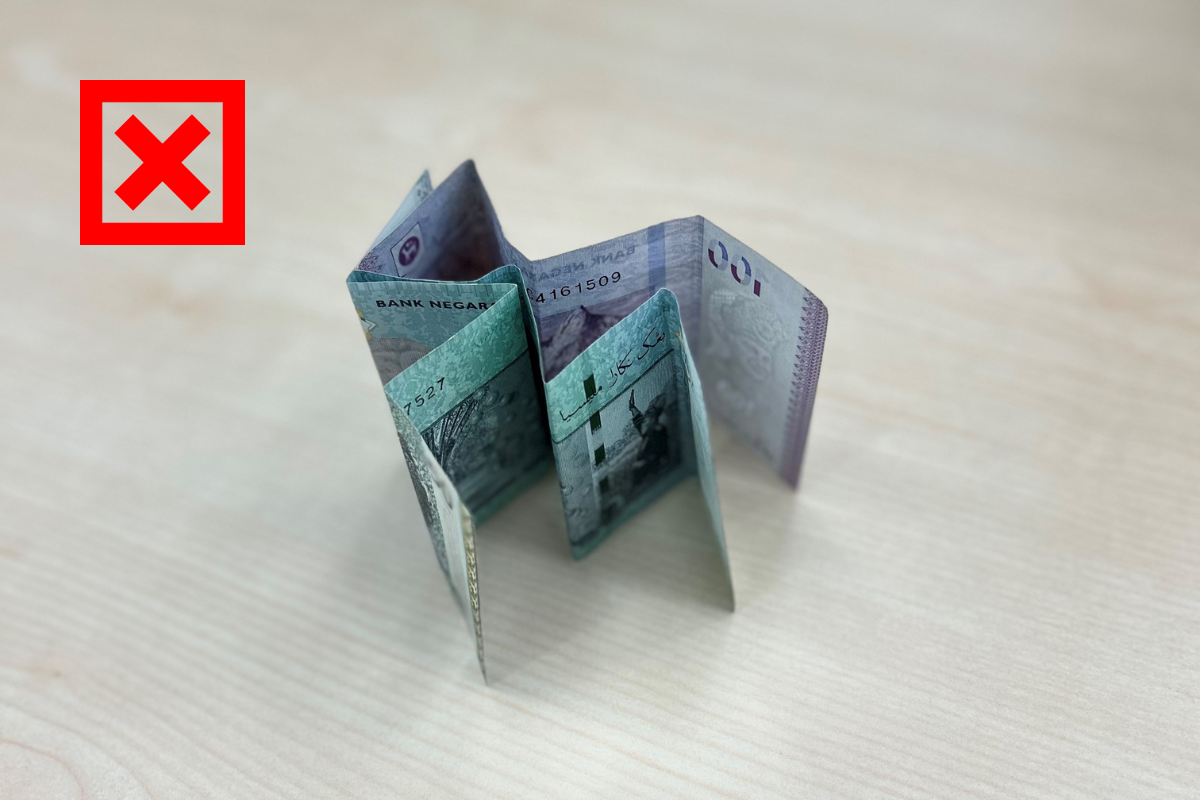
DO NOT modify or fold paper banknotes repeatedly (e.g. as decoration) as it will leave permanent folding marks
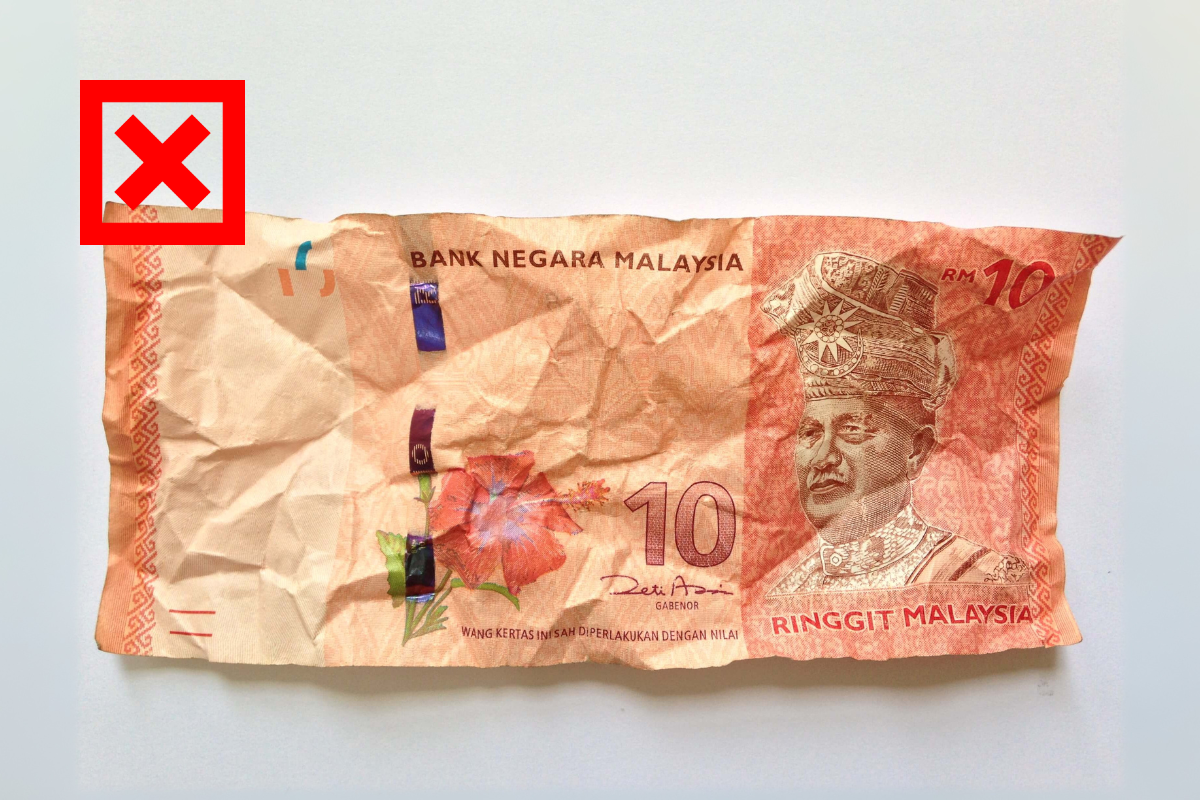
DO NOT purposely crumple paper banknotes
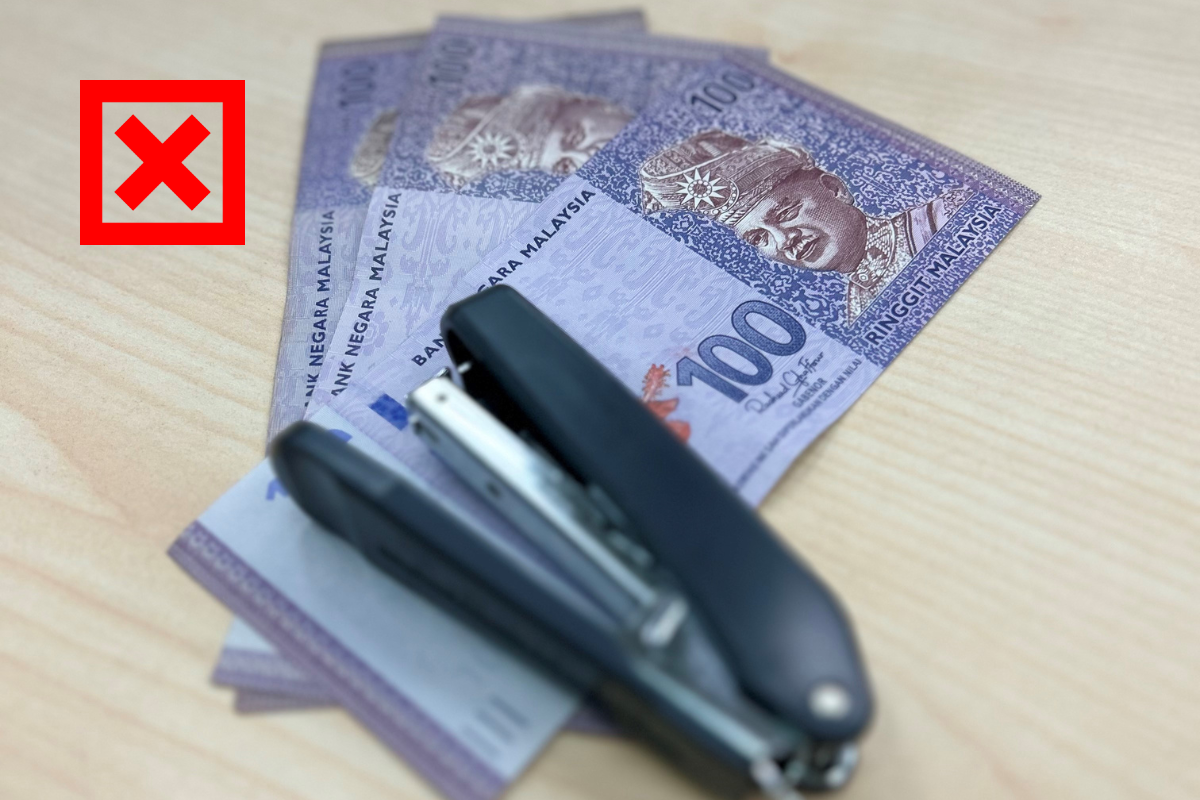
DO NOT staple, use sharp instruments or pins on paper banknotes
What makes a banknote good enough to be used again?
Clean or fit banknotes help to ease identification of security features. A Malaysian banknote is considered fit for recirculation if it meets all of the following criteria:
- Genuine and not counterfeit
- Free from holes, tears, tape or missing portion
- Has uniform brightness and free from excessive soiling
- Free from ink-wear, particularly on the portrait of SPB Yang di-Pertuan Agong
- Free from defacement
What condition must a banknote be in to be exchanged?
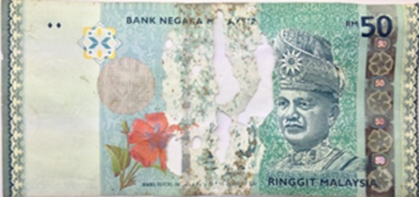
These are examples of banknotes that do not meet the prescribed quality standards and are no longer suitable for distribution. They should be exchanged

Burnt

Crumpled

Punctured

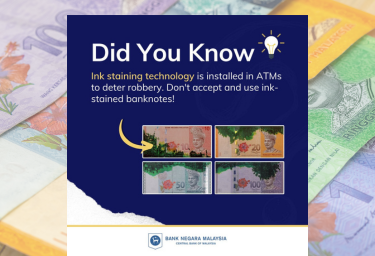
Ink-worn

Shrunk

Repaired
Where can we exchange damaged or unfit banknotes?
Unfit currency whether defaced, mutilated or otherwise damaged, may still hold value. Take the opportunity to exchange them at any bank.
Members of the public are advised to regularly check the respective financial institutions' website for update. For further information, please liaise directly with the respective participating financial institutions.
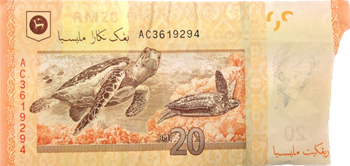
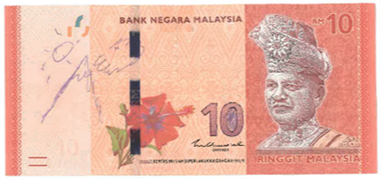
STRAIGHT FORWARD CASES: FIs to reimburse customer on the same day
 |
 |
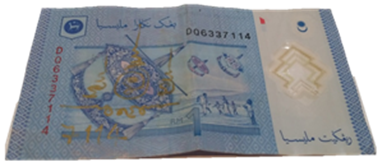 |
| The size of the defaced currency note is two third (2/3) or more of the original size |
The defaced currency note does not contain any marking on the portrait of DYMM Yang di-Pertuan Agong or writings depicting political slogans; and |
The currency note is not defaced due to markings or writings of words, figures and others |
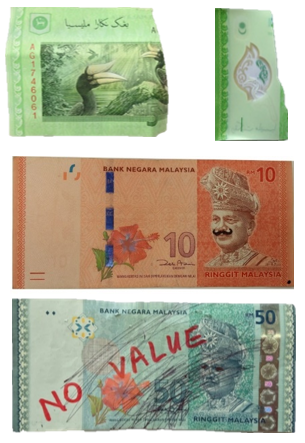
DOUBTFUL CASES: FIs to advise customer that currency needs to be sent to BNM for assessment. Value will be refunded into customer’s account after assessment
 |
 |
 |
|
Does not fulfil conditions of straight forward cases |
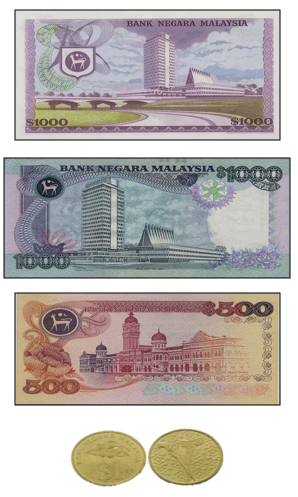
Demonetised currency |
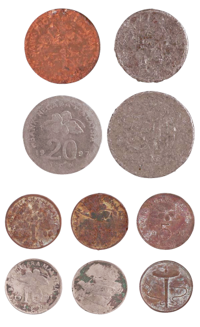
Tampered coins |
 |
 |
 |
|
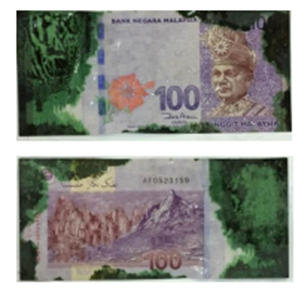
Ink-stained |
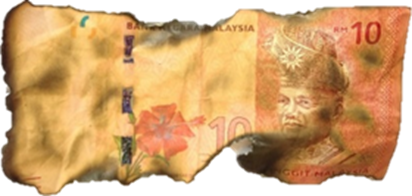
Burnt |
Termite infested |
Looking to deposit your coins?
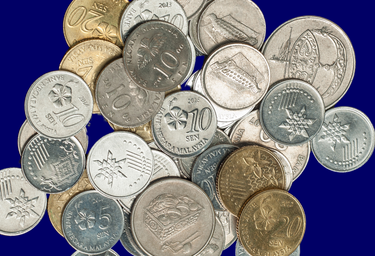
If you have a collection of coins, there are several Coin Deposit Machines (CoDM) operated by selected financial institutions throughout the country. Depositing your coin collection will help put the money back into circulation for others to use.
Members of the public are advised to regularly check the respective financial institutions' website for update. For further information, please liaise directly with the respective participating financial institutions.